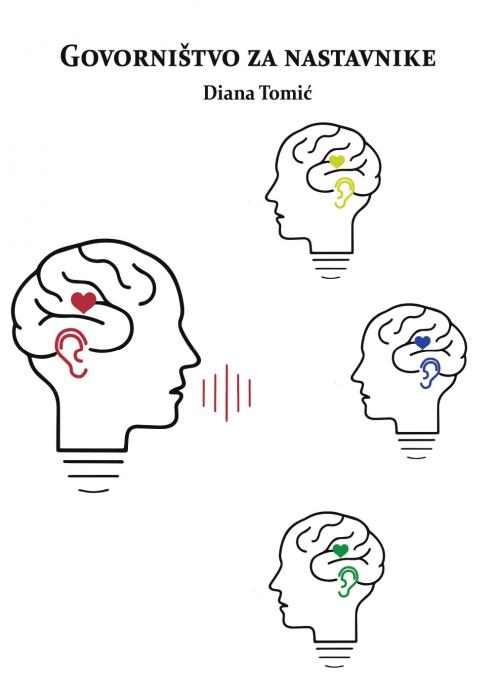
Public Speaking for Teachers
Synopsis
The book Public Speaking for Teachers by Diana Tomić is a valuable, critical scientific work that can be used as instructional material and as a textbook. The book has nine chapters, thematically grouped into three parts. The first part includes three chapters that define the context of public speaking for teachers: Speech, Public Speech, Communication; Public Speaking Anxiety and Listening Skills. The opening chapter addresses the difference between public speaking and rhetoric, emphasizing the difference between abilities and skills, providing a framework for understanding the relationship between speech/speaking, public speaking and communication. The author explains the importance of communication skills in contemporary society, educational challenges related to oracy/speaking skills, and concludes by outlining the difference between rhetoric and public speaking. The second chapter deals with fear and stage fright, framing fear of public speaking as one of the communication-related anxieties, supported by well-known research in social psychology. It outlines the causes and symptoms of fear and stage fright, and provides techniques to reduce them, with special emphasis on phonetic techniques grounded in Croatian tradition. In both literature and educational practice, little attention is given to the listening skills. Therefore, the author introduces the science of listening and defines listening competencies which she terms “oratory listening.” The second part of the book focuses more specifically on preparing public speeches. The first chapter – Preparing a Public Speech – offers a detailed interdisciplinary overview of the preparation process, ranging from ancient concepts to TED Talks, incorporating insights from information and communication theory. The following chapter is dedicated to Speech Delivery. The introduction presents research highlighting the significance of delivery for the success of a public speech. The author then describes types of delivery and the characteristics of a good delivery. Delivery is further analyzed through prosodic features and oracy skills, demonstrating the evidence-based approach implemented in various exercises. In the chapter on nonverbal communication, the author debunks popular, often unscientific content and emphasizes the importance of research-based knowledge. She systematizes and classifies sources of nonverbal cues, principles of interpretation, and their interrelations. In the final section, she applies theoretical knowledge to nonverbal delivery during public speaking. As a public speaking instructor herself, the author brings valuable teaching-oriented content in the final three chapters. The chapter on speeches for special occasions offers a classification and preparation guidelines for the most common special occasion speeches in teachers’ profession, emphasizing the need for further research of these public speaking genres. Although references are limited, the author identifies sources that can help researchers interested in epideictic speeches. The chapter on debate defines classroom debate and introduces the construct of critical learning, which encompasses multiple concepts—from critical thinking to independent learning. The author critically presents scientific insights into the strengths and limitations of classroom debate, providing detailed instructions for its preparation. The final chapter addresses the assessment of public speaking, a topic rarely explored by Croatian scholars. The author carefully selects assessment scales and rubrics for evaluating speeches and provides guidelines for adapting them to educational practice.
Chapters
-
Predgovor
-
1. GOVOR, GOVORNIŠTVO, KOMUNIKACIJA
-
1.1. Sposobnosti i vještine: komunikacijske, govorničke i govorne
-
1.2. Komunikacijskim vještinama do uspjeha
-
1.3. Suvremeno govorništvo i govorničke vještine
-
1.4. Govorno izražavanje i govorne vještine
-
1.5. Retorika
-
1.6. Govorništvo, retorika, vještine i poučavanje
-
2. STRAH OD JAVNOGA GOVORA I TREMA PRED JAVNI NASTUP
-
2.1. Strah od javnog govora u kontekstu komunikacijskih strahova
-
2.2. Čega se bojimo i što osjećamo?
-
2.3. Može li javni govor postati ugodno iskustvo?
-
2.4. Kako mjeriti stupanj straha od javnoga govora i što učiniti s rezultatom?
-
3. SLUŠANJE GOVORA
-
3.1. Znanost o slušanju
-
3.2. Kompetencije slušanja - govorničko slušanje
-
3.3. Vrste neslušanja
-
3.4. Aktivno slušanje
-
3.5. Pisani i govoreni jezik
-
4. PRIPREMA JAVNOGA GOVORA
-
4.1. Faze pripreme govora
-
4.2. Proces pripreme
-
4.3. Struktura govora
-
4.3.1. Priprema glavnog dijela
-
4.3.2. Priprema uvoda i zaključka
-
4.4. Govornički postupci: obrazlaganje, jezik i figurativnost
-
5. IZVEDBA JAVNOGA GOVORA
-
5.1. Vrste govorničke izvedbe
-
5.2. Odlike dobre govorničke izvedbe
-
5.3. Govorna sredstva i vještine
-
5.3.1. Govorna sredstva
-
5.3.2. Govorne vještine
-
5.4. Od govornih sposobnosti do govornih vještina – primjeri vježbi
-
5.5. Poučavanje govorničke izvedbe
-
6. NEVERBALNA KOMUNIKACIJA
-
6.1. Znanstveni pristup neverbalnoj komunikaciji
-
6.2. Kako pristupiti razumijevanju neverbalne komunikacije: izvori informacija, temeljne funkcije, karakteristike i načela tumačenja
-
6.3. Neverbalna komunikacija u govorničkoj izvedbi
-
7. GOVORI U POSEBNIM PRIGODAMA
-
7.1. Opće upute za pripremu govora u posebnim prigodama
-
7.2. Česti govori u posebnim prigodama
-
7.2.1. Pozdravni govori
-
7.2.2. Najava govornika
-
7.2.3. Govori prilikom dodjele nagrada ili priznanja
-
7.2.4. Zdravice
-
8. DEBATA U NASTAVI
-
8.1. Što je debata i čemu služi u nastavi?
-
8.2. Prednosti i nedostaci debate u nastavi
-
8.3. Upute za pripremu debate za nastavu
-
8.3.1. Formati debate
-
8.3.2. Uloge sudionika debate i njihova priprema
-
8.3.3. Teme i teze za debatu
-
8.3.4. Uporaba tehnologije u debatiranju
-
9. VREDNOVANJE JAVNOGA GOVORA
-
9.1. Vrednovanje komunikacijske kompetencije
-
9.2. Vrednovanje govorničkih vještina
-
9.3. Načini vrednovanja sadržaja javnoga govora i govorničke izvedbe
Downloads
Downloads
Published
Categories
License

This work is licensed under a Creative Commons Attribution-NonCommercial-NoDerivatives 4.0 International License.